
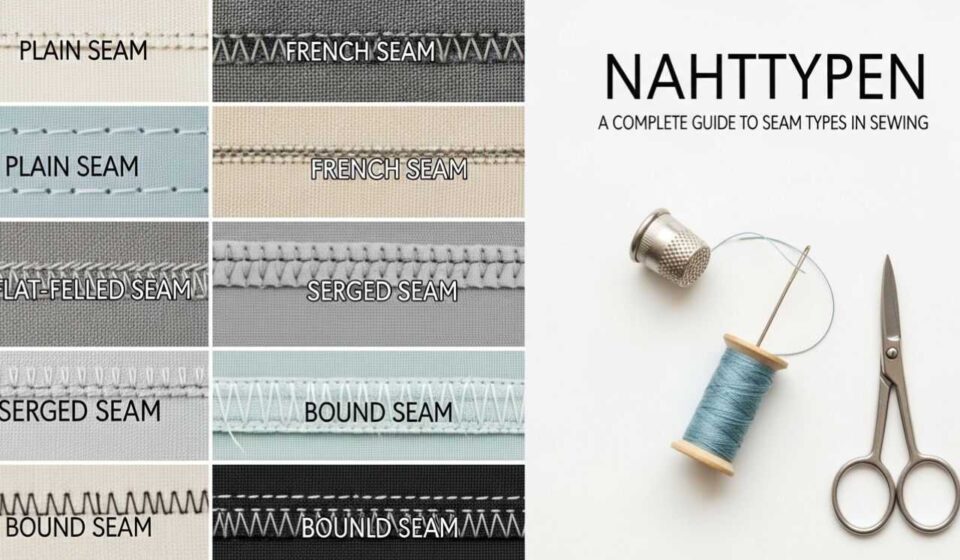

In the world of textile engineering and garment construction, Nahttypen—the German term for seam types—play a critical role in durability, comfort, and aesthetics. Whether you are a beginner in sewing or a professional fashion designer, understanding different seam classifications improves garment quality and finishing standards.
Seams are more than just stitches joining two fabric pieces. They influence structural integrity, elasticity, waterproofing, and overall appearance. This guide provides a detailed overview of the most important Nahttypen, their applications, and best practices for optimal results.
What Are Nahttypen?
Nahttypen refer to the various methods used to join fabric pieces together. Each seam type serves a specific purpose depending on:
-
Fabric type
-
Garment function
-
Required strength
-
Desired finish
-
Stretch properties
Choosing the appropriate seam is essential for both technical performance and visual appeal.
1. Plain Seam (Einfache Naht)
The plain seam is the most fundamental seam type in garment construction.
Characteristics:
-
Two fabric pieces placed right sides together
-
Stitched along the seam allowance
-
Pressed open or to one side
Applications:
-
Everyday garments
-
Dresses, shirts, trousers
-
Lightweight fabrics
Advantages:
-
Easy to sew
-
Suitable for beginners
-
Versatile
This seam often requires finishing (zigzag stitch, overlock, or binding) to prevent fraying.
2. French Seam (Französische Naht)
The French seam encloses raw edges within the seam itself.
Characteristics:
-
Fabric sewn wrong sides together first
-
Trimmed and folded
-
Sewn again to encase edges
Applications:
-
Sheer fabrics
-
Chiffon, silk, organza
-
Lingerie and delicate garments
Advantages:
-
Clean interior finish
-
Prevents fraying
-
Professional look
It is ideal for fine textiles where visible seam allowances would reduce quality.
3. Flat-Felled Seam (Kappnaht)
The flat-felled seam is commonly seen in denim garments.
Characteristics:
-
One seam allowance folded under
-
Stitched flat against the garment
Applications:
-
Jeans
-
Workwear
-
Sportswear
Advantages:
-
Extremely strong
-
Durable under stress
-
Clean finish inside and outside
This seam is widely used in industrial garment production because of its strength and reliability.
4. Bound Seam (Eingefasste Naht)
A bound seam uses bias binding to enclose raw edges.
Characteristics:
-
Seam allowance covered with binding
-
Decorative or functional
Applications:
-
Unlined jackets
-
High-end tailoring
-
Visible interior finishing
Advantages:
-
Decorative element
-
Prevents fraying
-
Adds durability
Bound seams are often used in luxury garments to enhance interior aesthetics.
5. Lapped Seam (Überlappungsnaht)
In a lapped seam, fabric pieces overlap instead of meeting edge to edge.
Characteristics:
-
One piece placed over another
-
Topstitched in place
Applications:
-
Leather garments
-
Suede materials
-
Non-fraying fabrics
Advantages:
-
Strong construction
-
Suitable for thick fabrics
-
Decorative topstitching possible
This seam works well where traditional seam allowances would create bulk.
6. Overlock Seam (Overlock-Naht)
The overlock seam is created using a serger machine.
Characteristics:
-
Trims and finishes edges simultaneously
-
Multiple threads used
Applications:
-
Knitwear
-
Stretch fabrics
-
Mass production
Advantages:
-
Prevents fraying
-
Elastic
-
Fast and efficient
It is the standard in modern apparel manufacturing.
7. Taped Seam (Versiegelte Naht)
A taped seam is sealed with adhesive tape for waterproofing.
Characteristics:
-
Seam sewn normally
-
Waterproof tape applied over seam
Applications:
-
Outdoor jackets
-
Raincoats
-
Technical sportswear
Advantages:
-
Water-resistant
-
Weatherproof
-
Professional outdoor finish
Essential for performance apparel.
8. Decorative Seam (Ziernaht)
Decorative seams enhance the garment’s visual appeal.
Characteristics:
-
Contrast thread
-
Embellished stitching
-
Topstitch details
Applications:
-
Designer fashion
-
Haute couture
-
Casual wear branding
Advantages:
-
Aesthetic enhancement
-
Brand identity
-
Texture and dimension
These seams combine functionality with design creativity.
Seam Selection Criteria
When choosing the correct Nahttypen, consider:
1. Fabric Weight
Heavy fabrics require reinforced seams.
2. Stretch Properties
Knit fabrics demand elastic seams.
3. Garment Function
Sportswear needs durability and flexibility.
4. Interior Finish
Luxury garments require clean inner seams.
5. Production Method
Industrial manufacturing favors speed-efficient seam types.
Common Seam Finishing Techniques
To enhance durability and appearance, seam finishing is essential:
-
Zigzag stitching
-
Pinked edges
-
Bias binding
-
Serging
-
Hong Kong finish
Each technique reduces fraying and increases garment lifespan.
Industrial vs. Home Sewing Seams
| Feature | Home Sewing | Industrial Production |
|---|---|---|
| Equipment | Basic sewing machine | Overlock, coverstitch machines |
| Speed | Moderate | High-speed production |
| Seam Types | Plain, French, bound | Flat-felled, overlock, taped |
| Finish Quality | Variable | Standardized |
Understanding this distinction helps designers adapt their seam choices.
Why Nahttypen Matter in Fashion Design
Seam engineering affects:
-
Structural strength
-
Comfort level
-
Garment longevity
-
Cost efficiency
-
Brand positioning
In high-end fashion, interior seam quality reflects craftsmanship standards. In performance wear, seam choice determines functional reliability.
Final Thoughts
Mastering Nahttypen is fundamental for anyone involved in sewing, tailoring, or fashion production. From the basic plain seam to highly technical waterproof constructions, each seam type serves a strategic role in garment architecture.
A professional garment is not defined solely by fabric selection or design aesthetics. The seam structure determines how the garment performs, feels, and endures over time. By understanding seam classifications and their applications, you elevate both technical competence and creative potential.
Whether you are sewing at home or managing industrial production, selecting the correct seam type ensures structural integrity and refined finishing.